

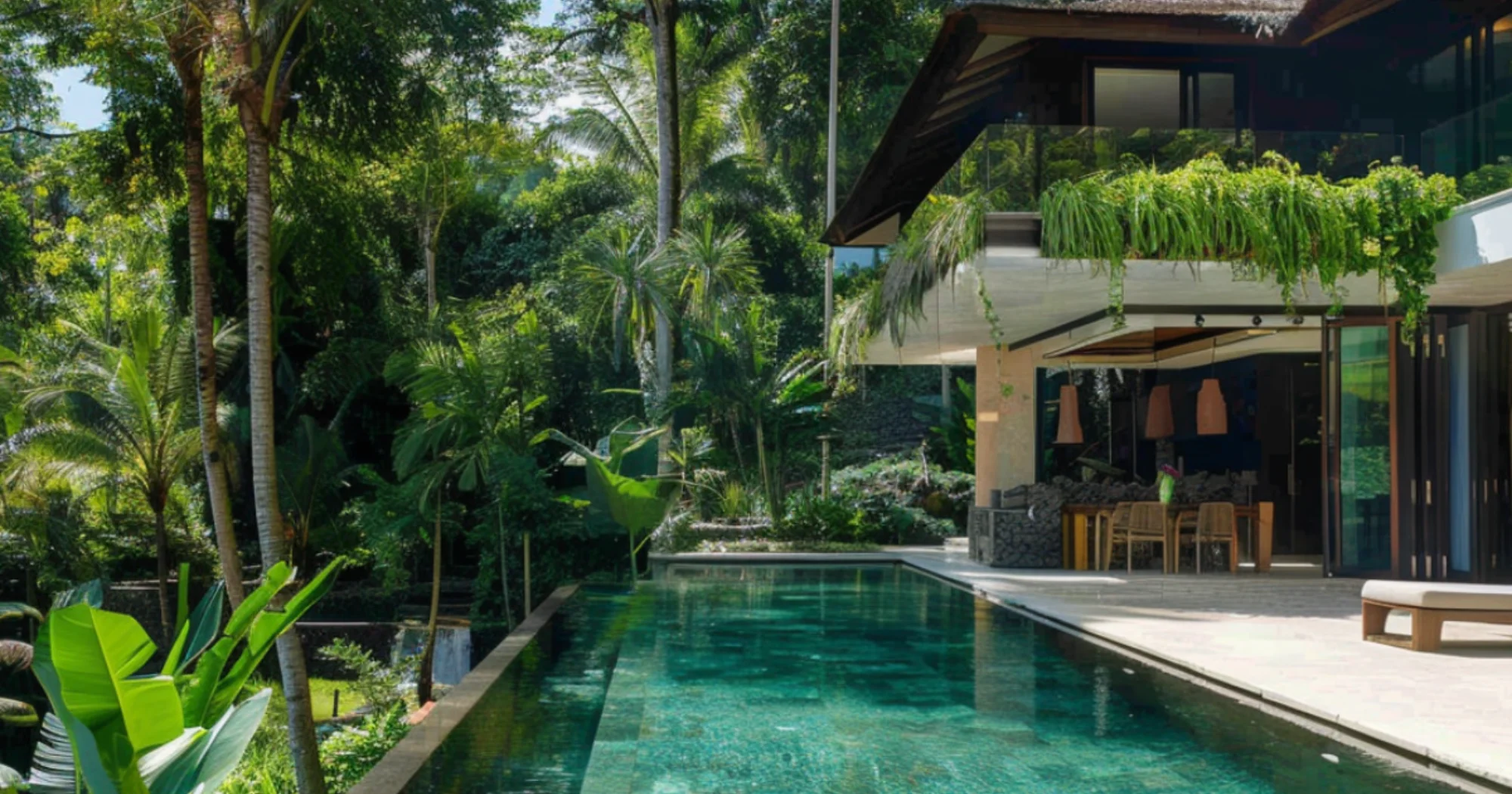
In recent years, Bali’s real estate market has become one of the fastest-growing investment destinations in the world. Unlike the markets in Thailand, Spain and Dubai—which have long been on the radar of international investors—Bali has only come into focus in recent years and there are several reasons for this. The island boasts a favorable climate, a thriving tourism industry, a growing community of digital nomads and a lower entry price, creating a highly attractive environment for investors.
Additionally, there is an increasing demand for locations where it is possible to earn a stable additional income without excessive restrictions. At the same time, markets in Europe and the Middle East have become more expensive and restrictive, making Bali an increasingly attractive option. Bali’s location is particularly compelling for those looking to purchase real estate that can be used both for personal vacations and as a source of passive income.
Why do people invest in international real estate?
International real estate has become one of the most reliable ways for many investors to grow their assets. It is particularly popular in markets where tourism is growing rapidly and the cost of living is lower than in Europe. There are several reasons for this.
- Passive income —Real estate allows you to earn a stable additional income, especially in regions where year-round demand is strong.
- Impact of the tourism industry – Popular destinations like Bali, Thailand, and Dubai are visited by millions of people every year, creating constant demand for short-term accommodations.
- The Airbnb market - The popularity of short-term rentals is growing rapidly, and in the right areas, this can offer significantly better returns than long-term rentals.
- Higher returns - Demand for rental properties is high in popular destinations, making overseas investment attractive to investors.
More and more people are looking for opportunities that combine good returns, low entry costs and passive income. This is precisely why Bali is one of the most attractive destinations to consider today.

Unique Characteristics of the Bali Real Estate Market
The Bali real estate market differs from many other popular investment destinations in terms of its underlying structure. The island’s development has been rapid yet organic—investor interest is growing steadily alongside tourism, the expat community and new development projects. Here are the key factors that make the Bali market unique.
- High average returns – The average net return in the Bali market is 10–16% per year, which is significantly higher than in other comparable markets.
- Leasehold vs. freehold system – In Bali, the most accessible and popular form of ownership for foreigners is leasehold, which allows land to be leased for 30 years with the option to extend and is also the most cost-effective
- Strong year-round rental market - Tourism and digital nomads keep yields at a very high level.
- Lower entry prices - Compared to popular regions in Dubai, Spain, and Thailand, it is possible to invest in villa-type projects in Bali with significantly less initial capital.
- Strong Airbnb culture – Bali is one of Asia’s leading short-term rental destinations.
These characteristics create an investment environment that is favorable for both novice and experienced investors.

The Real Estate Market: Bali vs. Thailand
Although Bali and Thailand are both known as investment hotspots in Southeast Asia, their real estate markets differ in several key ways. Both countries attract millions of tourists, but for investors, the final choice may depend on the flexibility of property rights and the nature of the rental market.
The Thai market is a mature and stable market, suitable for those who prefer slow and steady growth. It is dominated by traditional tourism, which is strongly linked to high-rise buildings, hotels and apartment complexes. Additionally, different regulations and ownership structures play a role, directly influencing how easy it is for foreign investors to enter the market and what kind of returns can realistically be expected.
Options for Owning Real Estate
One of the key differences between Bali and Thailand lies in how foreigners can own real estate. In both countries, the system for foreign investors is somewhat restricted, but the nature and flexibility of these restrictions vary greatly.
In Thailand, it is easiest for foreigners to buy an apartment—this grants full freehold ownership, but there is a restriction: foreigners may own a maximum of 49% of the building’s saleable area. The remaining 51% must remain in the ownership of Thai citizens. Buying a villa or house is more complicated because a foreigner cannot register the land directly in their own name. Therefore, either a 30-year leasehold (with the option to extend) or a corporate structure is used. (Siam Legal International, n.d.)
In Bali, the system is simpler. Foreign investors have a fully legal and widely used option to hold a leasehold, which grants the right to use the property for typically 25–30 years (with the option to extend).
Tourism market
Although both Bali and Thailand are known as major tourist destinations, their accommodation and rental markets are quite different in nature. This directly affects the kind of returns an investor can expect.
Thailand’s rental market does not depend solely on tourists. Demand is also driven by local residents, long-term expats, retirees and remote workers. Nevertheless, tourism in Thailand has historically been very hotel-centric. A large portion of visitors prefer to stay in hotels or apartments built for mass tourism—large buildings, many rooms and standardized services. Villa-style accommodations do exist in Thailand, but on a much smaller scale and often targeted at the luxury segment. Although demand in Thailand comes from multiple sources, which makes the market more stable, this also means lower yields and less focus on villas. Rental yields in Thailand average between 5% and 8%, which is stable but lower than in Bali. (Long-Term Residents …, 2026)
The Real Estate Market: Bali vs. Spain
Spain has been one of the most popular foreign investment destinations among Estonians for years, but the dynamics of this market differ significantly from those of Bali.
Spain’s advantage lies in its stability and strong infrastructure, but at the same time, this means higher price levels, lower returns and more regulations, particularly regarding short-term rentals. Tourism in Bali is clearly more growth- and trend-oriented. Tourism in Spain is mature and stable, which means that prices rise more slowly and the returns on new developments are not as impressive as in Bali.
Admission fee
The difference in entry-level prices between Spain and Bali is one of the clearest factors with the most visible impact on investors. While real estate prices in Spain have risen year after year and popular regions such as the Costa del Sol, Barcelona and Mallorca have become the domain of high-budget investors, getting started in Bali is significantly easier.
In Spain, a small city apartment often costs between 400,000 and 700,000 euros. A new-build or seaside villa is usually only available in the €700,000–1,000,000+ range, meaning that high-quality real estate already requires a substantial capital investment.
In Bali, on the other hand, you can acquire a modern villa with a private pool for 2–3 times less initial capital. Essentially, for the same price, you get several times more square footage, a better layout and an investment specifically designed to generate short-term rental income.
All of this makes the island’s market accessible even to those whose budget would not be sufficient for the Spanish market. This difference creates a situation where Bali is accessible both to novice investors and to those who simply wish to diversify their portfolio without needing a million-euro initial investment.
Rental yield
When comparing real estate returns in Bali and Spain, the picture is quite clear: Bali offers significantly higher potential rental returns. The reason is simple—Bali’s tourism and villa culture are built specifically around the short-term rental model, while in Spain, returns are limited by both regulations and high property values.
In Spain, short-term rental yields average 3–5% per year. In many cities and coastal areas, short-term rentals are heavily regulated or even restricted. Airbnb apartments require special licenses, which are not always easy or possible to obtain. This makes the investment more stable but significantly less profitable.
In Bali, the opposite is true: tourist villas are specialized developments created specifically to generate rental income. Year-round visitors, strong Airbnb demand and more flexible regulations allow villa owners to achieve yields that often reach 10% or more. In successful areas, the actual yield can be even higher, depending on the project and the level of management.
Regulations
Regulations are one area where Spain and Bali differ the most, especially when it comes to short-term rentals. In Spain, there has been a clear trend in recent years toward stricter controls on Airbnb and short-term rentals.
In several major cities, Airbnb-style short-term rentals are either restricted, strictly licensed, or outright banned in certain areas. For example:
- Barcelona no longer issues new short-term rental licenses, and the proportion of tourist apartments is being reduced each year;
- local communities strongly oppose the growing number of tourists and digital nomads;
- several coastal cities have implemented “tourism quotas” that limit the number of rental apartments;
- significant fines are imposed for violations related to short-term rentals.
This means that even if real estate is purchased for rental purposes, the investor may not necessarily obtain the right to rent it out on a short-term basis. In addition to short-term rental restrictions, squatters (illegally occupied apartments or tenants who refuse to move out) are also a problem for Spanish investors. Since the laws clearly favor tenants, evicting them can take months or even a couple of years. This is a risk that directly affects foreign investors who do not live in Spain.
In Bali, the situation is the opposite. The concept of tourist villas is clearly regulated and accepted, and short-term rentals through Airbnb are a normal part of the island’s economy. Furthermore, Bali does not face the problem of squatters that is common in Spain; rental relationships are simpler, mostly short-term and tenant protection is significantly stronger.

The Real Estate Market: Bali vs. Dubai
We began writing this comparison before Dubai found itself at the center of the conflict between Iran and the U.S./Israel. For this reason, we are currently omitting the entire military conflict and the changes associated with it.
Dubai and Bali are both globally renowned investment destinations, but the nature of their markets is almost complete opposites. While Dubai is built on modern luxury, skyscrapers and the real estate market is growing at a record pace, Bali is based on nature, privacy, a slow-living lifestyle and boutique-style villas.
They share only one thing in common—strong tourism. Everything else is different. It is precisely this contrast that helps investors better understand which destination aligns with their investment philosophy.
Market segmentation
The market segments in Dubai and Bali differ in terms of target audience, price range and accommodation style. Dubai is dominated by modern, high-end metropolitan tourism: skyscrapers, large-scale development projects and a world-class business environment. Most tourists heading there are looking for a hotel experience or a high-rise apartment that offers comfort, services and modern city life.
Bali operates on a completely different wavelength—the island’s primary accommodation options are boutique apartments and private villas, which are ideal for vacationers, families and couples seeking a nature-oriented experience and privacy. The villa culture in Bali is so strong that it has become one of the island’s biggest selling points—something you won’t find in the Dubai market.
This also shifts the focus of investment. Dubai projects are suitable for those who prefer big-city luxury and high-rises. Bali is the best choice for investors looking to invest in boutique-style villas that offer guests a more personalized experience.
Pricing
The price difference between Dubai and Bali is one of the most significant distinguishing factors. While entering the real estate market in Dubai has become very capital-intensive, in Bali you can get started with a much smaller budget and often achieve better potential returns for your money. Dubai is often cited for its favorable tax environment, but there is an important distinction here: one thing is that the UAE does not have a general income tax for individuals.
Another thing is whether a specific investor can actually benefit from this advantage to its fullest extent. In practice, this depends, for example, on residency, investment structure, and the country in which the investor is tax-resident. The same applies to companies: it is one thing that Dubai has a reputation as a tax-friendly destination; it is another that the 0% tax rate does not automatically apply to every company or to all types of income in the same way. (AE Federal Tax Authority, 2026)
In the case of Dubai:
- villa prices generally start in the range of 1–2 million euros;
- prices are rising rapidly, and a large portion of the market is geared toward higher-income buyers;
- entering the market requires significant capital and often additional costs (licenses, taxes, administrative fees);
- average gross rental yield of 6–8% per year, depending on location and property type. (Dubai Estate, n.d.)
In Bali:
- For the same price as a small apartment in Dubai, you can make a worthwhile investment in Bali;
- construction and maintenance costs are lower;
- the potential for returns is significantly higher due to villa-style accommodations;
- Average gross rental yield of 13–18% per year, depending on location and property type.
The conclusion is clear: although Dubai’s taxes are favorable for investors, ultimately the prices reflect the luxury of a major metropolis. At the same time, Bali offers an entry price several times lower and a yield twice as high.
Lifestyle
The lifestyles of Dubai and Bali are complete opposites in nature, and this directly influences the types of tourists and renters who end up in each destination. Dubai offers a fast-paced, modern, and urban lifestyle, with a focus on luxury, shopping malls, skyscrapers and business. This suits people seeking the comforts of a big city, high-quality service and modern architecture. There is also plenty of glamour, which is part of Dubai’s image, and an entire ecosystem has been built around it.
Bali, on the other hand, offers a slower, nature-oriented lifestyle. Visitors come to the island to surf, practice yoga, explore nature and simply slow down. The wellness culture, cafes, surf clubs and digital nomad communities create an atmosphere on the island that cannot be replicated in Dubai.

Summary
Bali clearly stands out from the real estate markets in Thailand, Spain and Dubai in terms of price levels, rental yields and lifestyle.
While Thailand is more hotel-centric, Spain is heavily regulated and Dubai is expensive and luxury-oriented, Bali combines the three things investors seek most: a lower entry price, strong demand for short-term rentals and year-round tourist traffic.
Villas on the island perform better than in most other destinations because they perfectly align with why people come to Bali—privacy, space, nature and a healthy lifestyle. At the same time, rental income stability is supported by digital nomads, long-term visitors and year-round tourism.
All in all, the Bali market offers investors an opportunity where returns, lifestyle, and affordability converge at a very favorable point.
Contact us
If you feel like you’d like to learn more about how it all works and whether it’s right for you, I invite you to schedule a video call. We’ll calmly discuss all the options, risks, and your goals.
Book a free strategy call – I’m available for a call and will help you make an informed and confident decision.
REFERENCES
AE Federal Tax Authority. (2026). Issuance of Tax Certificates for Tax Residency. AE Federal Tax Authority. https://tax.gov.ae/en/services/issuance.of.tax.certificates.aspx
Dubai Estate. (n.d.). Rental yields in Dubai. Dubai Estate. https://www.dubaiestate.hu/en/rental-yields-in-dubai/
Long Term Residents visa Thailand. (2026). Long-Term Resident Visa program. Long Term Residents visa Thailand. https://ltr.boi.go.th/
Siam Legal International. (n.d.).Purchasing Property in Thailand. Siam Legal International https://www.siam-legal.com/realestate/thailand-property.php
Siam Legal International. (n.d.). Buyin a Condo in Thailand https://www.siam-legal.com/realestate/thailand-buying-condo.php


